Algeria was once part of the Roman Empire and was known for its production of olives, fertile soil, and effective trade routes.
Today, Algeria is believed to have one of the largest collections of Roman ruins outside Italy. It has many places for visitors to explore, including ancient forums, well-preserved theatres, Roman roads, and magnificent mosaics that are thousands of years old.
What makes Algerian Roman ruins so special is that they are not crowded with tourists. Sometimes, there is almost nobody around, and the silence makes the experience feel completely different from visiting the famous archaeological sites you see in other parts of the world. Many of these sites are remarkably well preserved, allowing you to take your time, walk through ancient streets without long queues, stop to photograph the ruins, and simply enjoy the surrounding landscape.
The stones beneath your feet are the same stones that merchants, soldiers, citizens, and travelers walked on centuries ago. The columns, temples, mosaics, arches, and remains of entire cities give you the impression that history is still alive beneath your feet.
And Algeria has a lot of places where you can have that feeling.
Tipasa, where Roman ruins meet the Mediterranean
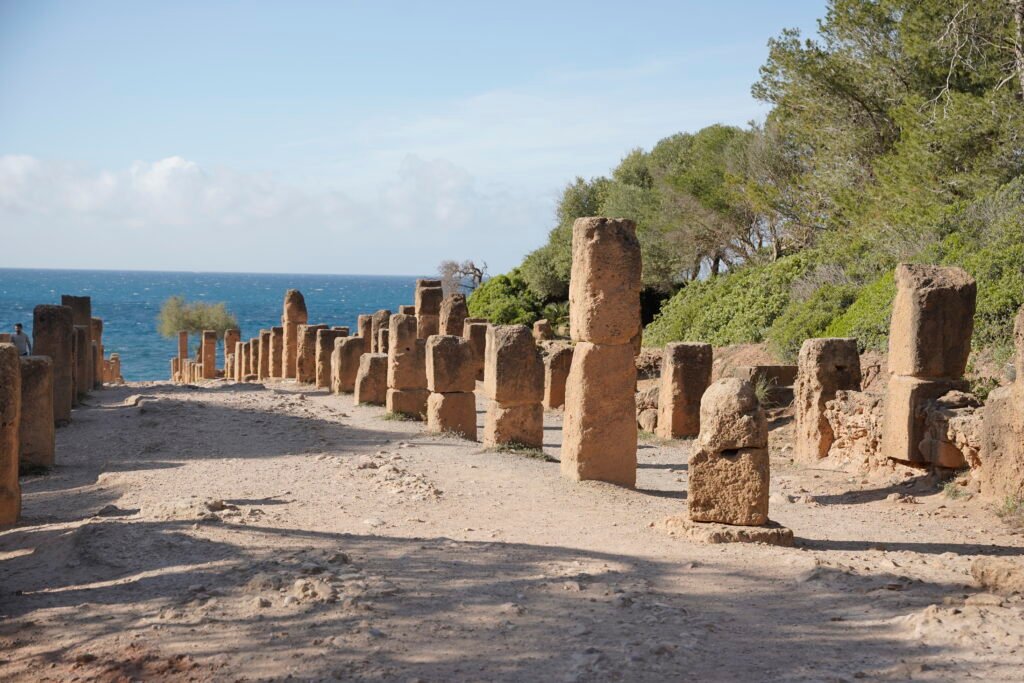
If you are staying in Algiers, Tipasa is one of the best places to begin exploring Roman Algeria. Located about 70 km west of the capital, the ancient site sits beside the Mediterranean, with Mount Chenoua providing a dramatic backdrop.
Walking through the archaeological site, you can see ancient streets, walls, columns, public buildings and mosaics while looking out towards the Mediterranean.It is easy to imagine Roman life here almost 2,000 years ago. Merchants, soldiers and travelers would have moved through the city while ships arrived and departed along the coast.
The combination of Roman ruins and Mediterranean landscapes makes Tipasa one of the most beautiful archaeological sites in Algeria. UNESCO inscribed Tipasa on the World Heritage List in 1982.
After exploring the ruins you can head towards the coast, enjoy the scenery, take a boat trip or swim in the turquoise water.
Cherchell: Ancient Caesarea
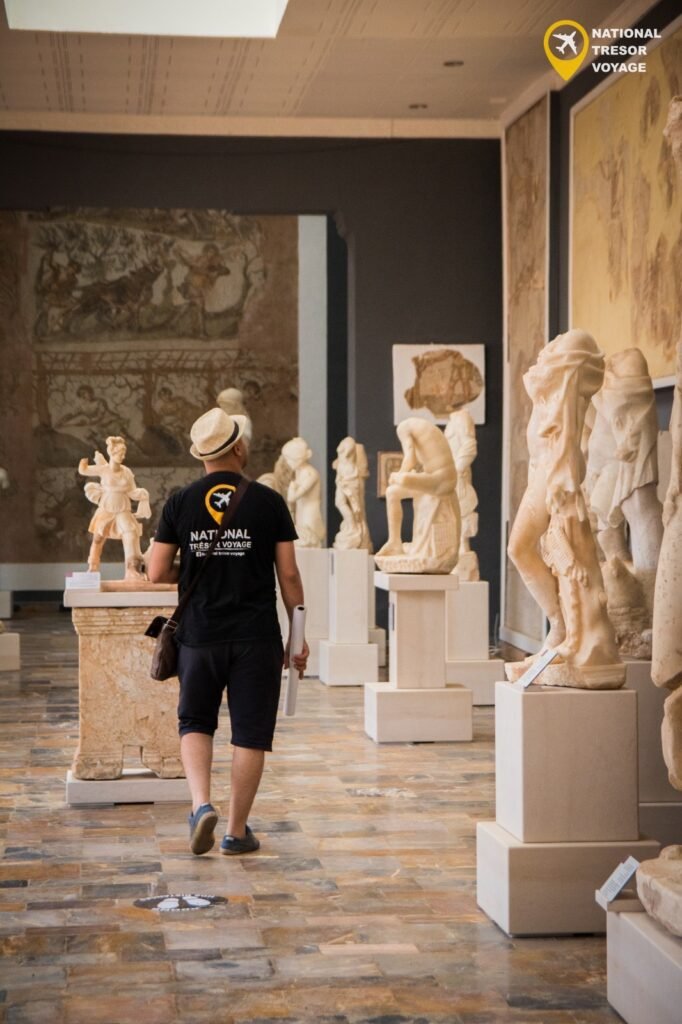
Cherchell is located close to Tipasa. It is the old city of Caesarea. Actually, the whole city is a seaside town, with roman ruins inside. The Cherchell Archaeological Museum contains ancient sculptures and other objects that help provide context for the ruins and the history of Caesarea.
Tipasa and Cherchell are the finest introduction to Algeria because they combine what makes the country so interesting, ancient history and spectacular landscapes in the same place.
Djémila: One of Algeria’s Most Beautiful Roman Cities
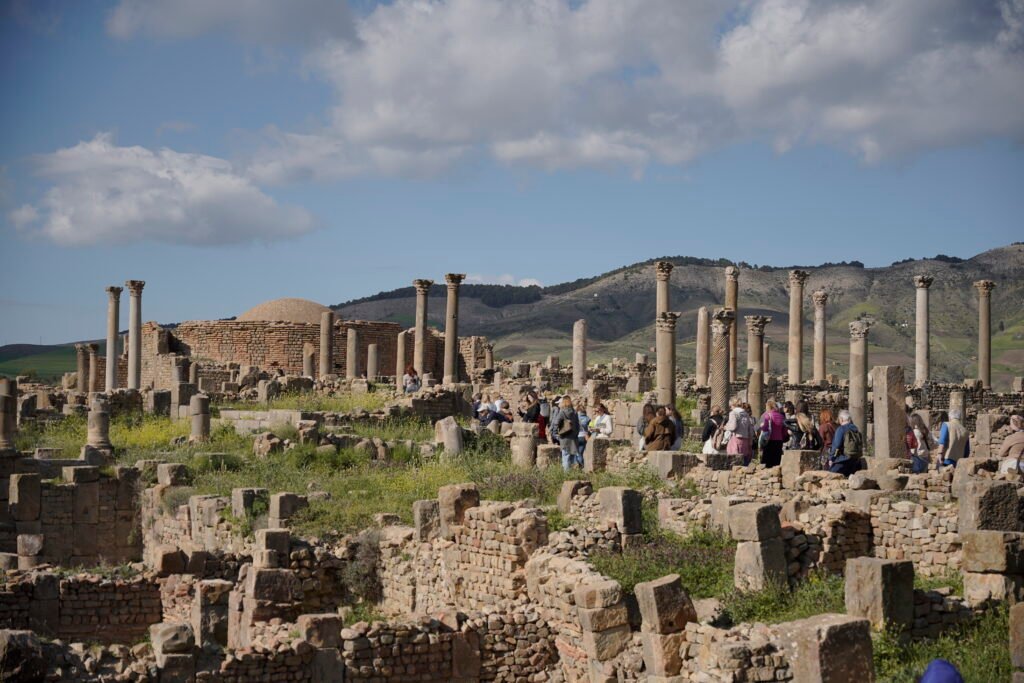
While Tipasa and Cherchell are about the Mediterranean Sea, Djémila is an entirely different entity. Known in antiquity as Cuicul, It is situated on an altitude of 900 m in northeastern Algeria and is considered one of the best examples of Roman city planning in the mountainous area. The city was established as a Roman colony during the reign of Emperor Nerva. Further development of the city included the construction of temples, forums, basilicas, markets and triumphal arches. One of the most remarkable features of Djémila is its architectural achievements and natural landscapes. In Djémila, people can walk along the streets, columns and monumental structures. It enables to feel what a Roman city looked like. The city was included in the list of World Heritage Sites in 1982.
Timgad: An Entire Roman City Preserved in the Landscape
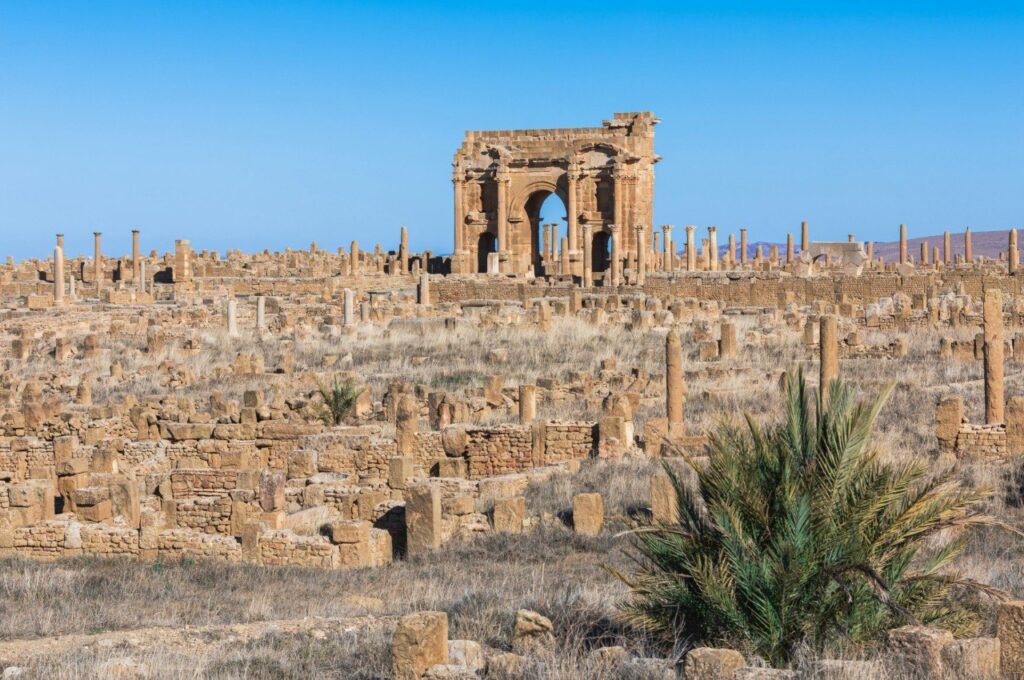
Timgad is another of Algeria’s remarkable Roman archaeological sites. Situated in the northern foothills of the Aurès Mountains, the city was founded by Emperor Trajan in 100 AD as a military colony. Its layout reflects the principles of Roman urban planning, with the main streets organized around the cardo and decumanus. Today, the remarkably preserved ruins offer visitors a fascinating glimpse into how Roman cities were designed and built. As you explore Timgad, you can still identify:
- Houses decorated with mosaics
- The Arch of Trajan
- The ancient forum
- The Roman theater
- The cardo and decumanus
- Public baths
- Temples and civic buildings
UNESCO considers Timgad an outstanding example of Roman town planning and architecture in North Africa.
Tiddis: a Mountainous Roman city
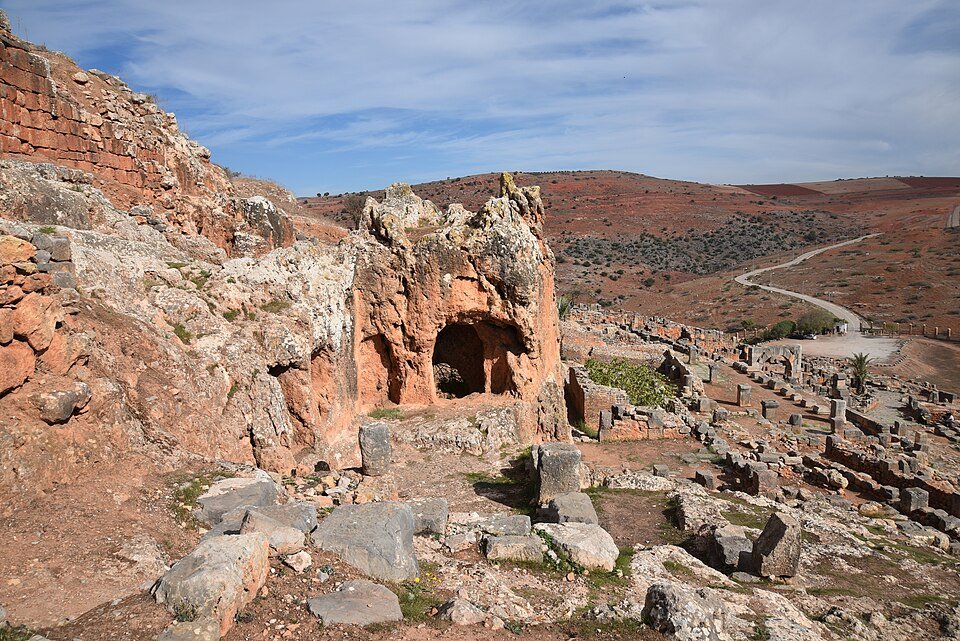
For people who would like to find something more exciting than Algeria’s best-known Roman places, Tiddis, located close to Constantine, is a good option.
Unlike Timgad with a strict grid layout, Tiddis is built on mountainous terrain. This makes Tiddis particularly interesting for anyone studying how Roman and earlier North African settlements adapted to difficult geographical environments.
Guelma and the Ancient City of Calama
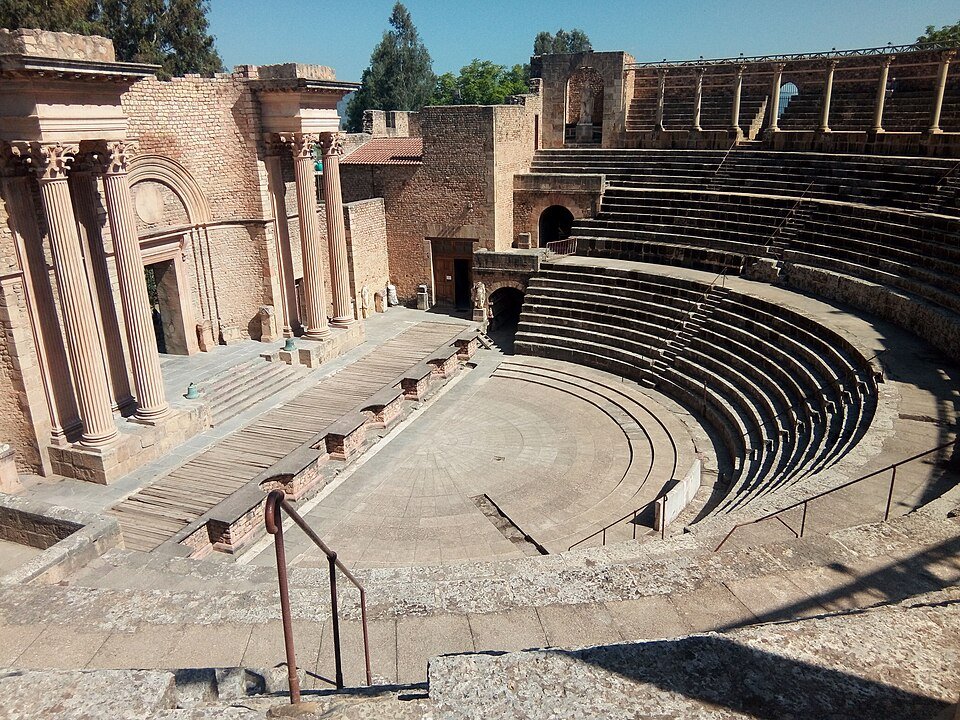
The Roman story continues in Guelma, ancient Calama. Calama was an important city in ancient Numidia and later became an important center within the Roman world. Its archaeological remains include a Roman theater and other ancient ruins.
Annaba and hippo Regius
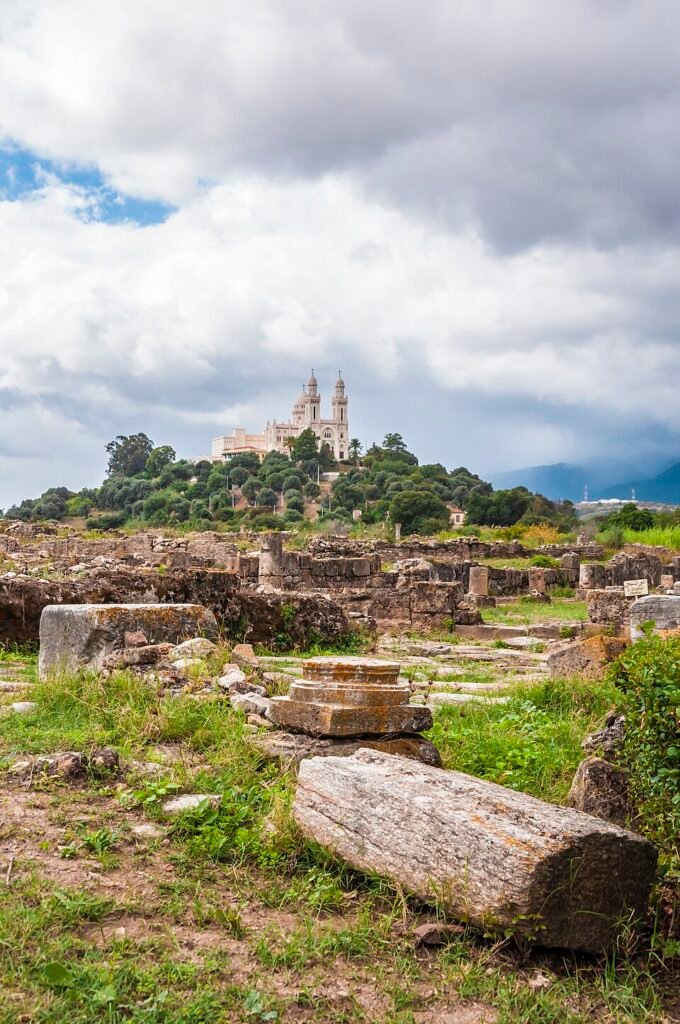
In the east Annaba, we will find the remains of Hippo Regius which was a prominent Roman city in North Africa where we can explore the ruins and see remains of public buildings, baths, streets and beautiful mosaic floors. These ruins provide another example of how Roman cities developed in North Africa and how Roman architecture was adapted to the local environment. Nearby, the Museum of Hippone contains archaeological objects discovered in the area and provides useful information about the history of the city.
But Hippo Regius is especially significant because of Saint Augustine, who became bishop of Hippo and spent the final part of his life there.
The nearby Basilica of Saint Augustine, built in the 19th century, is associated with the memory of the famous bishop and provides another connection between the ancient city and its later history.
There Are Many More Roman Ruins in Algeria
The sites above are only some of the best-known examples.
Algeria contains a much larger collection of Roman archaeological sites, including ancient cities, theaters, temples, baths, roads, bridges and mosaics spread across the country such as:
- Thagaste
- Madaure
- Thibilis
- Khamissa
- Mila
- Theveste
- Sitifis
- Thagura
Why Explore the Roman Ruins of Algeria?
1. Fewer Crowds
Compared with many of Europe’s most famous Roman archaeological sites, Algeria’s ruins can offer a much quieter experience. You can often take your time exploring the site, photographing monuments and walking through ancient streets without dealing with large crowds. For anyone passionate about archaeology, this makes a huge difference. You have time to stop, look closely at the architecture and appreciate the details.
2. Exceptional Roman Urbanism
Sites such as Timgad and Djémila allow visitors to study Roman urban planning on a remarkable scale. Many of the structures and layouts are remarkably well preserved, allowing you to understand how Roman cities were designed and organized.
3. Roman History in a North African Context
The Roman ruins of Algeria are not isolated monuments. They are part of the much larger history of ancient North Africa, where Roman, Punic, Numidian, Berber and later Christian and Muslim traditions interacted over centuries.
4. Archaeology Surrounded by Amazing Landscapes
One of the most distinctive features of Algeria’s archaeological heritage is the variety of its landscapes between the sea, Atlas moutains or in the middle of the town.
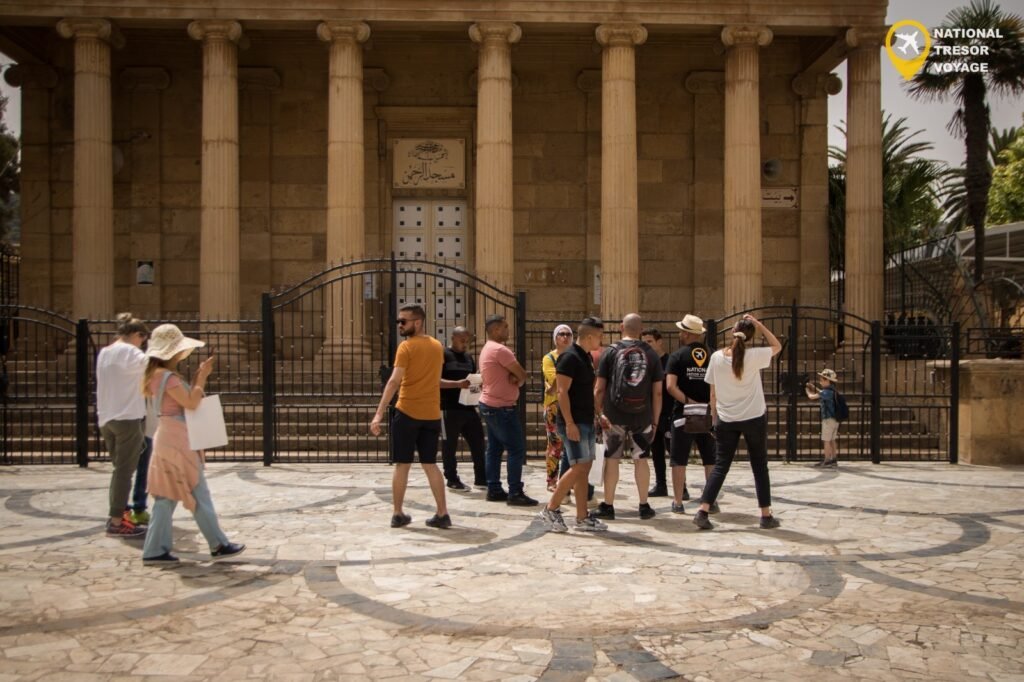
How to visit the Roman Ruins of Algeria?
Exploring Algeria’s Roman heritage can be an unforgettable experience, but visiting several archaeological sites requires some planning because they are spread across different parts of the country.
Our travel agency provides tours of Algeria’s Roman archaeological sites and helps you from preparing and organizing a trip to such practical issues as accommodation and transport.
If you come from abroad, we can help you in matters of visa and preparation for your arrival. Regardless of what you are interested in and how much time you have at your disposal, we will help you choose sites you will visit during your excursion.
We can offer a combination of Roman sites with other attractions of Algeria, such as Mediterranean coast, mountains, ancient cities, and culture. Having a properly organized trip means that you will not need to think about transfer or accommodation issues. If you want to discover Roman Algeria, we can help you plan the trip from start to finish.